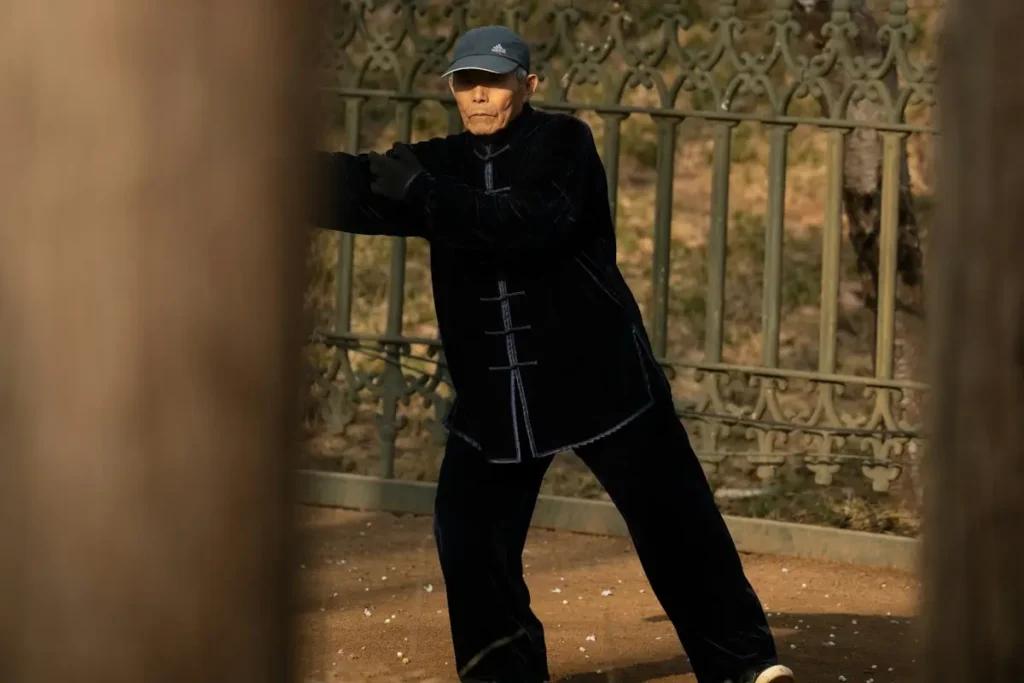
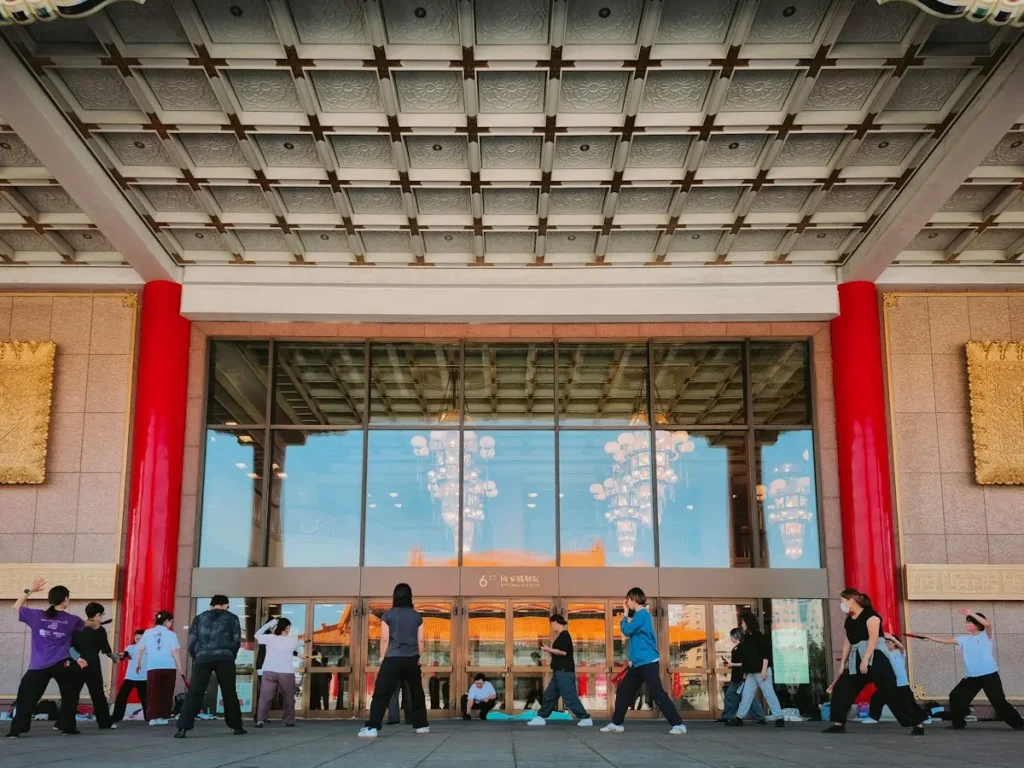
The best-documented benefit of tai chi is better balance and fewer falls in older adults; there is also good evidence for reduced knee arthritis pain, and promising results for blood pressure, sleep and stress. It can be adapted to different abilities, but the program, instruction and individual health context matter. The studies below examine specific outcomes; they do not establish that tai chi extends lifespan.
At a glance: what tai chi can offer
- Tai chi is slow, flowing movement combined with posture, breathing and focused attention.
- Strongest evidence: improved balance and a lower rate of falls in older people.
- Good evidence: less pain and better function in knee osteoarthritis and fibromyalgia.
- Promising: lower blood pressure, better sleep, less anxiety and stress.
- Trials use structured programs over weeks or months; improvement is not guaranteed on a fixed timetable.
What is tai chi?
Tai chi (tai chi chuan) originated in China as a martial art and is now practised worldwide mainly for health. A session consists of a sequence of slow, continuous movements – called a “form” – performed in a relaxed, upright posture with deep, calm breathing. Weight shifts smoothly from one leg to the other, which is a large part of why it trains balance so effectively.
There are several styles (Yang, Chen, Sun, Wu and others). Most research uses simplified Yang-style forms or programmes designed for older adults or people with arthritis. For health purposes, the style matters less than practising regularly.
What the research says
| Benefit | Strength of evidence | What studies found |
|---|---|---|
| Balance and falls | Strong | Reviews of randomised trials show fewer falls in older adults who practise regularly |
| Knee osteoarthritis | Good | Pain and physical function improved as much as with standard physiotherapy |
| Fibromyalgia | Good | Symptoms improved at least as much as with aerobic exercise |
| Blood pressure | Moderate | In people with prehypertension, tai chi lowered blood pressure more than aerobic exercise in one large trial |
| Sleep | Moderate | Improved sleep quality in older adults with insomnia |
| Stress, mood, anxiety | Moderate | Many small trials report benefits; quality varies |
| Heart failure | Limited–moderate | Better quality of life and mood; less effect on fitness measures |
Balance and fall prevention
Falls are a leading cause of injury and loss of independence in older age. Meta-analyses of randomised trials have found that tai chi reduces the rate of falls in older adults, with effects that seem larger with longer practice. It trains exactly what matters: controlled weight shifting, leg strength, ankle stability and awareness of body position.
Joints and chronic pain
In a randomised trial in people with knee osteoarthritis, twice-weekly tai chi for 12 weeks improved pain and function as much as standard physical therapy, with greater gains in mood and quality of life. In fibromyalgia, a larger trial found tai chi at least as effective as aerobic exercise, with greater improvement in the longer-duration tai chi programs.
Blood pressure, sleep and stress
A 12-month trial in China compared tai chi with aerobic exercise in adults with high-normal blood pressure and found a greater reduction in systolic blood pressure in the tai chi group. In the cited 2014 insomnia trial, tai chi improved some reported symptoms compared with sleep education, but cognitive behavioral therapy achieved better insomnia remission and more sustained improvement. Tai chi should not be presented as equivalent to insomnia treatment. Other trials report mood benefits, with results varying by program and population.
Tai chi, yoga and walking: different ways to move
| Tai chi | Yoga | Walking | |
|---|---|---|---|
| Balance | Excellent | Good | Moderate |
| Leg strength | Good | Moderate | Moderate |
| Aerobic fitness | Low–moderate | Low | Moderate–good |
| Flexibility | Moderate | Excellent | Low |
| Joint impact | Very low | Low (depends on style) | Low |
| Stress reduction | Good | Good | Good, especially outdoors |
The table is a broad practical comparison, not a validated ranking or a head-to-head clinical result. Benefits depend on the specific style, effort and program. Choose an activity you can repeat and include balance and strength work appropriate to your needs.
How to get started
- Find a class: local community centres, sports clubs and some physiotherapy practices offer beginner or “tai chi for health” classes. Programmes such as Tai Chi for Arthritis and Fall Prevention train instructors in many countries.
- Try online: follow a beginner video at home 2–3 times a week. Start with our 10-minute morning routine.
- Be patient: the movements feel unfamiliar at first. Most studies show benefits after 8–12 weeks of regular practice.
- Keep it comfortable: bend your knees only as far as feels good; use a chair nearby for support if you need it.
Safety first: tai chi is very safe, but talk to your doctor or physiotherapist if you have severe osteoporosis, recent joint surgery, dizziness or a high fall risk – and practise next to a chair or wall for support.
What to do tomorrow
Stand next to a kitchen counter and slowly shift your weight from one foot to the other for two minutes, keeping your knees soft and breathing slowly through your nose. That’s the core movement of tai chi – and a balance workout.
Related: How to Age Slower: The 3 Pillars That Actually Work · Walking and Zone 2
Frequently asked questions
What are the main benefits of tai chi?
The strongest evidence is for better balance and fewer falls in older adults, with good evidence for knee arthritis and fibromyalgia pain, and promising results for blood pressure, sleep and stress.
How often should I practise tai chi?
Most studies use two or three sessions a week for at least 8–12 weeks.
Is tai chi better than yoga?
Tai chi is especially strong for balance; yoga for flexibility. They complement each other – choose the one you will do regularly.
Turn this into a habit in 30 days
The 30-Day Longevity Reset turns the research into 15 minutes a day: eating window, movement, strength and calm – one simple step at a time. Join the waitlist for first access and a founding-member price.
Sources
- Lomas-Vega R et al. Tai chi for risk of falls: a meta-analysis. J Am Geriatr Soc, 2017. PubMed
- Huang ZG et al. Systematic review and meta-analysis: Tai Chi for preventing falls in older adults. BMJ Open, 2017. PubMed
- Wang C et al. Comparative effectiveness of tai chi versus physical therapy for knee osteoarthritis: a randomized trial. Ann Intern Med, 2016. PubMed
- Wang C et al. Effect of tai chi versus aerobic exercise for fibromyalgia: comparative effectiveness randomized controlled trial. BMJ, 2018. PubMed
- Li X et al. Tai chi vs aerobic exercise on blood pressure in patients with prehypertension: a randomized clinical trial. JAMA Netw Open, 2024. PubMed
- Irwin MR et al. Cognitive behavioral therapy vs. Tai Chi for late life insomnia and inflammatory risk: a randomized controlled comparative efficacy trial. Sleep, 2014. PubMed
- Yeh GY et al. Tai chi exercise in patients with chronic heart failure: a randomized clinical trial. Arch Intern Med, 2011. PubMed
This article is for education only and is not medical advice. Read our medical disclaimer.