
Healthy ageing starts with habits you can repeat. This site explores meal timing, everyday movement, strength and tai chi. Their evidence differs: exercise and balance training have established practical benefits, while fasting remains an optional tool with important limits. Start with one manageable change and build from there.
At a glance: practical habits, realistic expectations
- Genes, environment, health care and daily habits all influence health and lifespan.
- A US observational study linked five lifestyle factors with longer estimated life expectancy; this is not a personal promise.
- Our three pillars: fasting (when you eat), movement (steps, strength, Zone 2) and tai chi (balance, stress, sleep).
- Start small this week – the plan at the end takes about 20 minutes a day.
Why there is no immortality pill
Every few months a new supplement, peptide or gadget promises to “reverse ageing”. Most of these claims rest on studies in yeast, worms or mice, on tiny human trials, or on biomarkers that may not translate into a longer, healthier life. Some may turn out to be useful. None, so far, has been shown in large human studies to add years of healthy life.
Large observational studies associate healthier lifestyles with longer life expectancy and more years free of some chronic diseases. Trials also show benefits of specific habits for outcomes such as fitness and balance. These are different kinds of evidence, and neither promises a particular lifespan. That is the honest starting point for this site: there is no immortality pill. This is the closest thing we have.
Genes, environment and the choices you can make
One large family-tree analysis estimated lifespan heritability below 10% after accounting for assortative mating. That is a population estimate under a particular model. It does not mean that the remaining percentage is under your control: environment, circumstances, health care and chance also matter.
A US cohort analysis estimated life expectancy at age 50 to be about 14 years longer for women and 12 years longer for men with five low-risk lifestyle factors than with none. These were modelled observational comparisons, not years guaranteed by changing habits. Moderate alcohol intake was included in the study definition; the finding is not a reason to start drinking.
Our three topics offer practical starting points, rather than a complete health plan. Nutrition quality, sleep, avoiding tobacco and appropriate medical care matter too. Choose habits that fit your circumstances; fasting is not necessary for everyone.
Pillar 1: Fasting – when you eat matters
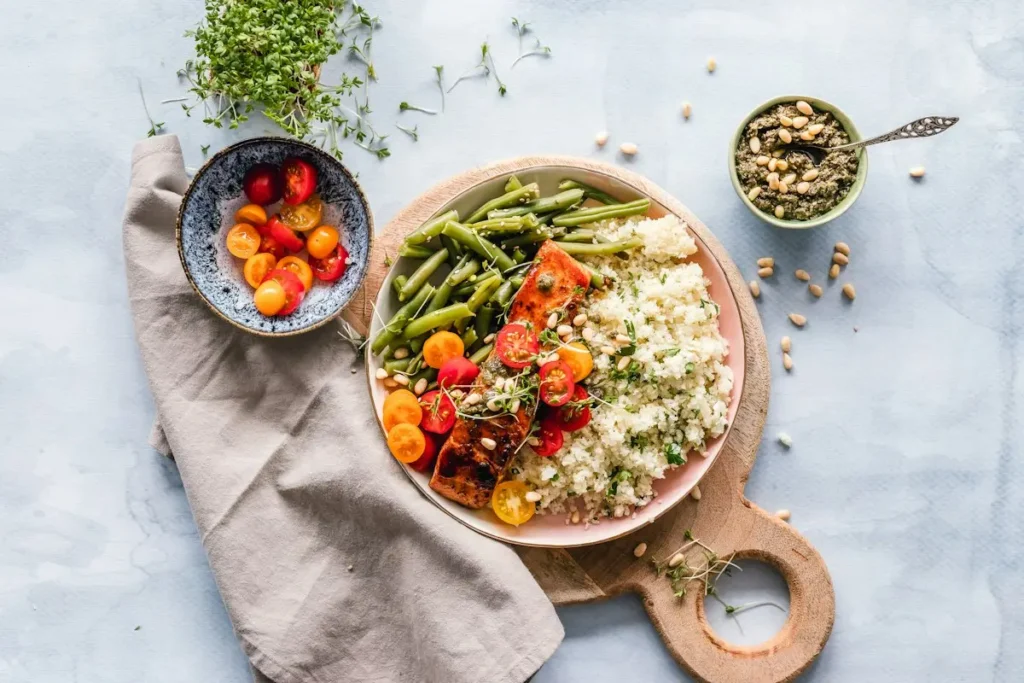
Fasting simply means a planned period without food. In practice, for most people, that is time-restricted eating: eating all meals within a window of, for example, 10 or 8 hours, and fasting overnight for the rest.
What the research says
Reviews of animal and human studies suggest that regular fasting periods can improve insulin sensitivity, blood pressure and some markers of inflammation, and trigger cellular “clean-up” processes such as autophagy. In humans, though, the effects are often modest and depend on what and how much you eat in the window. One randomised trial of 16:8 eating, for example, found no meaningful extra weight loss compared with simply eating three meals a day. Fasting is a tool, not magic.
How we recommend starting
- Begin with a 12-hour overnight fast (for example 8 pm to 8 am). Most people already do something close to this.
- A longer fasting window is optional. A comfortable overnight routine may be enough for your purposes; review suitability before making it more restrictive.
- Drink water, black coffee or plain tea during the fast. Keep meals in the window high in protein, vegetables and whole foods.
- Don’t use fasting to compensate for poor sleep or stress – it tends to make both worse.
Fasting is not for everyone. Talk to your doctor first if you are pregnant or breastfeeding, have diabetes or take medication that affects blood sugar or blood pressure, are under 18, or have any history of eating disorders.
Our fasting guides go deeper: a safe 16:8 beginner’s guide, what happens in your body hour by hour, longer fasts and fasting after 50.
Pillar 2: Movement – the minimum effective dose
If exercise were a pill, it would be the most prescribed drug in the world. You do not need to train like an athlete to get most of the benefit; you need to move regularly and include three ingredients.
Steps
A large meta-analysis of daily step counts found that risk of death kept falling as steps increased, levelling off at around 6,000–8,000 steps a day for adults over 60 and 8,000–10,000 for younger adults. Every extra thousand steps counts if you are starting low.
Strength
Muscle is health insurance: it protects your joints, your blood sugar and your independence as you get older. Pooled data suggest that around 30–60 minutes of muscle-strengthening activity per week is linked to a meaningfully lower risk of death. That can be two short sessions at home with bodyweight exercises.
Fitness (Zone 2 and beyond)
Cardiorespiratory fitness is one of the strongest predictors of how long people live. In a study of over 120,000 people who did treadmill tests, the least fit had a far higher risk of death than the fittest – a gap comparable to or larger than smoking. The good news: fitness improves quickly once you start. Easy “Zone 2” effort – where you can still talk in full sentences – is the safest place to begin.
The WHO recommends at least 150–300 minutes of moderate activity per week plus strength training on two or more days. Our movement guides show how to reach that in a busy week.
Pillar 3: Tai chi – balance, calm and strength
Tai chi is a slow, flowing practice that combines gentle movement, posture and breathing. It looks easy, and that is the point: almost anyone can do it, at almost any age, without equipment.
Its best-documented benefit is balance and fall prevention – reviews of randomised trials in older adults show that regular tai chi reduces the rate of falls. Falls are one of the most common reasons people lose independence later in life, so this matters more than it sounds. Studies also report improvements in blood pressure, stress, sleep quality and joint pain, although many of those trials are small.
We treat tai chi as the pillar that ties the others together: a calm morning routine that pairs naturally with an overnight fast and prepares your body for walking and strength work. Our tai chi guides include a 10-minute beginner routine.
What about peptides and other “longevity” trends?
Peptides, supplements and at-home cosmetic medicine are areas we will cover too – carefully, with the evidence clearly labelled and without promises. Some are promising, many are overhyped, and some carry real risks or are not approved for human use. They belong on top of the three pillars, never instead of them.
How to start this week
- Day 1–2: Note when you eat your first and last bite of the day. Aim for a 12-hour overnight gap.
- Day 3: Take a 20–30 minute walk, ideally after your largest meal.
- Day 4: Do 10 minutes of bodyweight strength: squats to a chair, wall push-ups, glute bridges.
- Day 5: Try 10 minutes of slow tai chi-style movement and breathing in the morning.
- Day 6–7: Repeat what felt good. Add 1,000 steps a day compared with last week.
What to do tomorrow
Set one alarm: “last bite of food” 12 hours before your usual breakfast. Then take a 20-minute walk after lunch or dinner. That’s it – two small actions that cover two pillars.
Frequently asked questions
Can you really slow ageing?
You can’t stop ageing, but large studies show that habits such as not smoking, staying active, eating well and keeping a healthy weight are linked to roughly 12–14 extra years of life expectancy at age 50.
What is the single best habit to start with?
For most people, daily movement – more steps plus two short strength sessions a week – gives the biggest return. Use our Healthspan Score to see your personal priority.
Do I need supplements to age slower?
No. The three pillars – eating window, movement and tai chi – work without supplements. Some may help specific needs, but they should come on top of the basics.
Turn this into a habit in 30 days
The 30-Day Longevity Reset turns the research into 15 minutes a day: eating window, movement, strength and calm – one simple step at a time. Join the waitlist for first access and a founding-member price.
Sources
- Ruby JG et al. Estimates of the heritability of human longevity are substantially inflated due to assortative mating. Genetics, 2018. PubMed
- Li Y et al. Impact of healthy lifestyle factors on life expectancies in the US population. Circulation, 2018. PubMed
- de Cabo R, Mattson MP. Effects of intermittent fasting on health, aging, and disease. N Engl J Med, 2019. PubMed
- Lowe DA et al. Effects of time-restricted eating on weight loss and other metabolic parameters (TREAT trial). JAMA Intern Med, 2020. PubMed
- Paluch AE et al. Daily steps and all-cause mortality: a meta-analysis of 15 international cohorts. Lancet Public Health, 2022. PubMed
- Momma H et al. Muscle-strengthening activities are associated with lower risk and mortality in major non-communicable diseases. Br J Sports Med, 2022. PubMed
- Mandsager K et al. Association of cardiorespiratory fitness with long-term mortality among adults undergoing exercise treadmill testing. JAMA Netw Open, 2018. PubMed
- World Health Organization. Guidelines on physical activity and sedentary behaviour, 2020. WHO
- Lomas-Vega R et al. Tai chi for risk of falls: a meta-analysis. J Am Geriatr Soc, 2017. PubMed
This article is for education only and is not medical advice. Read our medical disclaimer.